Footwear Sample Development: 5 Clarifications to Make When a Client Returns After a Failed Project | JINXIU
What should a footwear supplier clarify when a past client returns after a failed sample project? This case-based article covers material standards, sample quality, technical support, feedback timing, and trust.

Let’s call this client Yt, a retailer who is from the United States. On July 12, 2025, Yt unexpectedly changed the name of our WhatsApp group, which was established for communication in 2022. Then, on July 28, she suddenly dropped a message into the group, enthusiastically proposing, Let’s start a sample, followed by several eager messages.
Our history with Yt began in September 2022, when we collaborated on a sample order. We went through 3 rounds of revisions, but the collaboration ended unsatisfactorily. During that time, we communicated through YT’s employee. When issues arose with the sample and both sides were frustrated, Yt herself stepped in, terminated the partnership, and demanded we send all remaining materials to another local company. Though we kept the WhatsApp group active and occasionally shared updates about our new designs, Yt rarely responded, so we avoided bothering her anymore.
Her sudden proactive outreach this time left us puzzled. Yt proposed starting a new sample immediately, with a bulk order of 50~100 pairs of thigh-high boots with 10cm heels. Based on her description, we recognized the style, which was similar to the one we worked on in 2022. Back then, Yt had another factory (let’s call it Fac-1) send us materials to complete the job. From 2022 to 2025, it appears that Yt has been working only on this design, possibly tweaking materials or colors while cycling through multiple manufacturers.
Our 1st collaboration with Yt ended poorly. She was abrupt, even threatening legal action if we didn’t return all materials to factory Fac-1, accusing us of potentially withholding or damaging them. We were transparent about ending or starting a partnership; both are fine, and we had no use for keeping her materials.
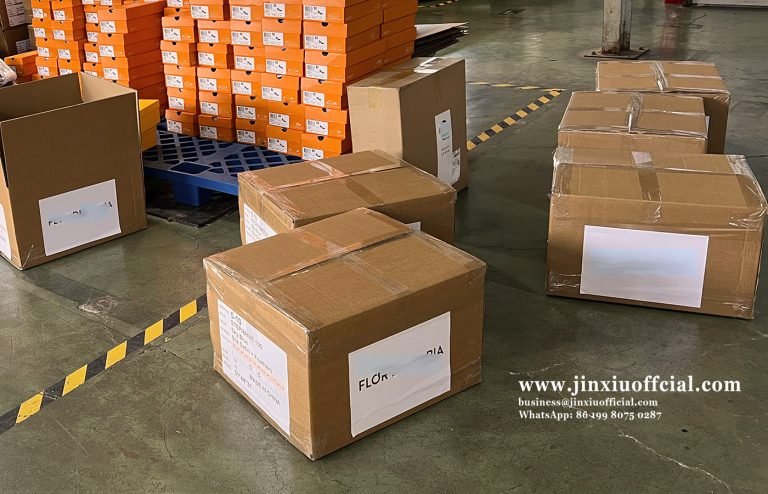
Our business focuses on customized orders based on clients’ specific designs and materials. Keeping her materials in my warehouse would only increase our storage costs, offering no value. For clients’ materials with MOQ, we provide free storage for leftover materials for up to 6 months. Beyond that, clients must handle their materials themselves, as storage space is more costly than the materials.
This time, Yt moved quickly. On August 28 at 3:32 PM Beijing time, she contacted us, signed an NDA on the same day, and arranged for her supplier to send partial raw materials. Within 2 days, she paid the sample fee. It seemed she had fallen out with her previous supplier (Supplier B) and urgently needed a new manufacturer for samples and bulk production, which led her back to us. She also arranged for other factories to send us sole and heel materials.
On 3rd September, while we were on a business trip in Shanghai, Yt called via video, asking us to pick up the remaining materials from Supplier B. We informed her we could only do it after returning on September 5.
On September 17, we received a physical sample boot she mailed from the U.S. Upon inspection, we identified some issues and emailed her for clarification.
Her response left us baffled. She instructed us to pack all materials and either ship them back to the U.S. or wait for her to pick them up during her visit to China in October. It appeared she canceled the order without explaining why.
Reflecting on this, we wonder if our questions about the sample caused a misunderstanding:
- Material Discrepancy: Yt requested the lining be made of EU-standard eco-friendly sheepskin, but the sample she sent had a standard PU lining. Using high-grade sheepskin would significantly increase costs for the bulk order. Could she accept this?
- Quality Concerns: The sample’s craftsmanship and materials were subpar. The latex used for the boot shaft was of low quality, lacking elasticity and likely to deform after a few wears. We typically avoid such materials unless specifically requested, as they compromise the wearing experience. Additionally, the latex edges were poorly cut and highly visible, which we found unacceptable. We asked if she could accept this or if we should optimize it, but improvements would raise costs.
Perhaps Yt found our questions unnecessary or confusing, but for us, these are critical to avoid post-sale disputes. Her approval of other factories’ standards doesn’t automatically apply to us; she needed to confirm her preferences explicitly.
These two points seemed contradictory: she requested higher-quality materials (increasing costs) but sent a sample with lower-quality craftsmanship. We needed clarity. We also asked if the sample came from her bulk inventory to understand if it represented her desired quality.
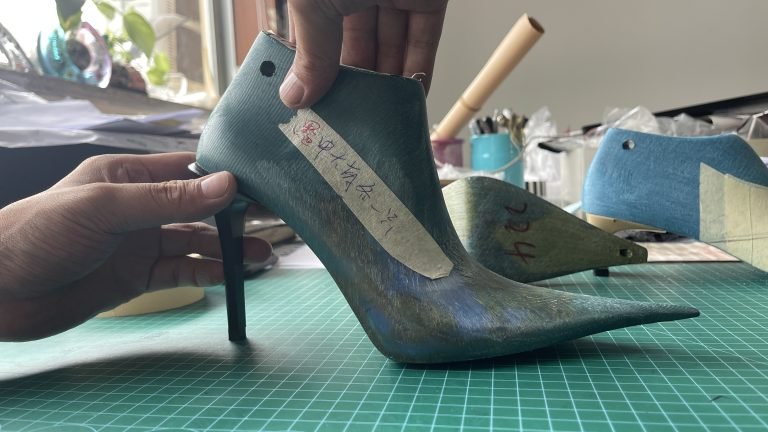
A 3rd issue was the heels. Y sent only 1 pair of heels without the correct molds(no shoe last).
We needed to create new molds, like lasts, and produce test shoes to ensure accuracy before making the final sample. The heel is decorated with fragile pearls, so we requested 2~3 extra pairs to use during mold testing to ensure stability and quality, to avoid delays if the pearls broke during assembly for the first time.
Y replied via WhatsApp that she’d only send more heels with a bulk order, not now. Her response suggested she suspected we wanted to keep her materials freely or questioned our professionalism.
On 4th, September, when picking up materials from Supplier B, I spoke with their boss. Supplier B had received shoes and materials from Y’s previous supplier (Supplier A), who had spent nearly a year tweaking the design without ever placing a bulk order. For reasons unclear, Y ended her partnership with Supplier A and moved to Supplier B, but their communication was minimal. Supplier B described Y’s demeanor as abrasive. When I shared this with Y, she said Supplier B’s communication was lacking, which is why she returned to us, a partner in 2022, and ended her brief engagement with Supplier B.
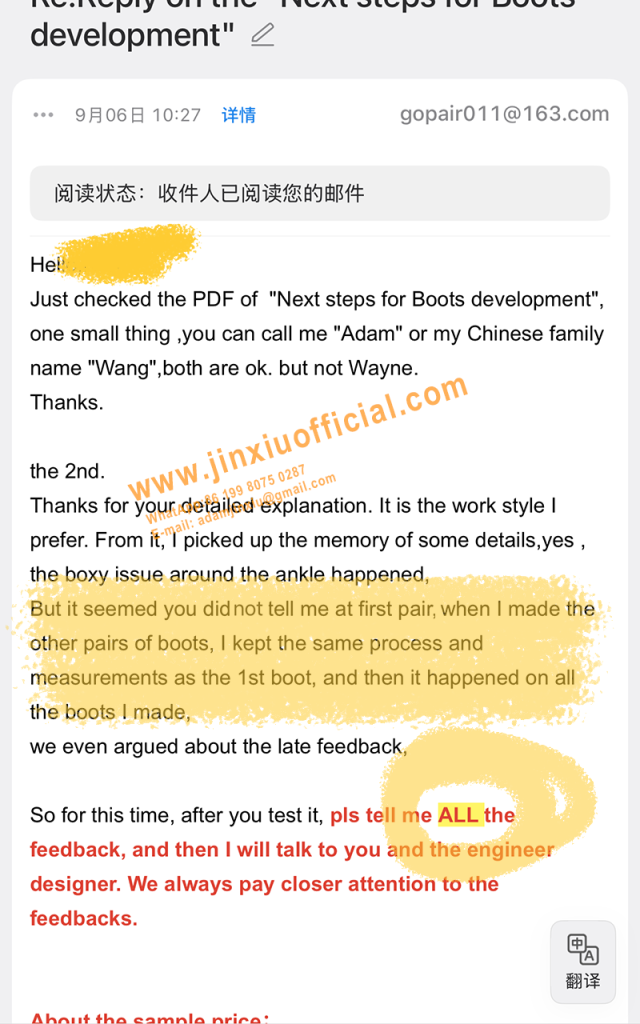
For the boxing issue of the boot that appeared in our 2022 samples, Y had actually discovered it with the 1st pair, but didn’t give us any feedback. It wasn’t until the end that we realized all the shoes we’d been producing had this problem(we were told about the feedback of the last shoe), which made both sides very upset. Finally, when we asked why she hadn’t told us about it earlier, her reply was that I thought you would discover the issue ourselves.
Y should know that our changes to samples are all based on feedback from buyer testing. For issues mentioned in the feedback, we make changes; for those not mentioned, we assume they’re normal and don’t alter them.
From Supplier F-1 in 2022, to Supplier A in 2024, Supplier B in 2025, and now us, we’re unsure why Y has cycled through so many suppliers. Regardless of the reasons, we believe any partnership, whether starting or ending, should be built on mutual respect and trust. Respect is the foundation of collaboration, beyond monetary considerations.
If our questions offended Y, she could have told us directly. As we communicate via text in a non-native language (English), misunderstandings can arise from word choices that don’t reflect our true intentions.
Our goal is to make quality shoes, and she can sell with confidence, and buyers are satisfied with the shoes they pay for. We do not want to change partners often; a stable and longtime workship relation is good for both parties’ business.
In the end, although the client communicated with us times, we did not want any other unforeseen problems to arise later, so we took the initiative to cancel the cooperation.
This case reminded us of a simple principle:
When a client returns after a failed sample project, the priority is not the order. It is clarification.
- Confirm the Material Standard Instead of Assuming It
One of the first issues in this project was the difference between the requested standard and the physical reference.
The client asked for EU-standard eco-friendly sheepskin lining, but the sample she sent used ordinary PU lining. This was not a small technical detail. It changed the cost structure, the expected product level, and the likely market position of the final boot.
In footwear development, this kind of mismatch is more common than many buyers expect. A buyer may want to upgrade the final product, but still use an older or lower-standard sample as the development reference. If this gap is not clarified at the beginning, both sides can move forward with very different assumptions about what is actually being made.
That is why suppliers need to confirm one basic point early:
Should the quotation and sample follow the written specification or the physical reference?
Without that clarification, later disputes become very likely.
- Treat Sample Quality Questions as Risk Control
When we reviewed the reference sample, we found several quality issues that could not be ignored.
The latex used in the boot shaft lacked elasticity and looked likely to deform over time. The cut edges were also rough and too visible for the level of product the client appeared to want. From our side, the correct next step was to ask whether the sample should be copied at the same lower standard or whether it should be improved; we have to get a confirmation answer from the retailer before moving forward.
This kind of question is sometimes misunderstood. A buyer may feel the supplier is making the process more difficult. But in reality, these questions are part of risk control.
A supplier that raises these issues early is not necessarily resisting the project. In many cases, they are trying to prevent future complaints, repeated revisions, or quality disputes during production.
In footwear sampling, asking the right technical questions is often a sign of responsibility, not a lack of cooperation.
- Clarify Whether the Technical Conditions for Sampling Are Actually Complete
Another issue was the lack of complete technical support for the sample.
The client provided heels, but not the correct lasts or molds needed to verify fit, balance, and alignment properly. The style also included fragile pearl decorations, which created additional risk of damage during trial and assembly. We asked for extra components(pearls and heel) for testing, but the client did not want to provide them at the sample stage. She may think we were trying to get more. because he thought he just wanted one pair of boots, so we will only need one pair of heels for the shoe, not 2 pairs or 3 pairs, but he did not think that we should make test shoes, the test shoe needs a heel and the components of the heel.
Even if no original last, we can also make a new last for the new sample, but the size may be a bit different from the reference boot he sent. So the best way is to get the original last.
This exposed a common problem in custom footwear development:
buyers often expect accurate sample results, but do not always provide the full technical foundation required to achieve them.
Without the right last, mold support, or trial components, sample accuracy becomes harder to guarantee. When that happens, the supplier is still expected to deliver a precise result, but without the conditions normally needed to do the job properly.
That is why technical readiness matters. If the sampling stage is under-supported, misunderstandings later are almost inevitable.
- Do Not Underestimate the Damage Caused by Delayed Feedback
Looking back at the earlier round of cooperation in 2022, one of the biggest problems was not just the sample itself. It was the timing and lack of feedback.
A defect that had already appeared in the first sample, which we sent, was not raised clearly until the third revision. They found a problem with the ankle part of the boot. By that stage, too much time had already been spent moving forward with the same unresolved issue.
This is one of the most expensive problems in sample development.
Suppliers can check workmanship, construction, and proportion. But many adjustments still depend on direct and timely buyer feedback. If feedback is delayed until the end, the revision cycle becomes inefficient, frustrating, and expensive for both sides.
A more effective approach is simple:
- Identify ALL the issue early
- Collect ALL feedback clearly
- Raise ALL concerns before the next revision starts
- Avoid HOLDING key objections until multiple rounds have already passed
In cross-border development, communication quality is often defined not by how much is said, but by how early the right things are said.
- Rebuilding Cooperation Requires Respect, Not Just Urgency
In the end, this second attempt also moved toward suspension. The project could not continue stably because the core issues had still not been properly aligned.
That does not mean returning clients are always a problem. But it does mean that a second cooperation cannot succeed on urgency alone.
A project can restart only when both sides are prepared to rebuild trust in a more structured way. That includes:
- Clearer material standards
- More realistic sample expectations
- more complete technical support
- more timely feedback
- more direct and respectful communication
In our view, a supplier should not say yes simply, especially when the buyer is in a hurry. Sometimes the more professional decision is to pause, clarify, and only continue if the project conditions are genuinely workable.
Conclusion
When a client returns after a failed sample project, the most important question is not whether the opportunity looks attractive. The real question is whether the reasons behind the earlier failure have been clearly identified and addressed.
Before moving forward, both supplier and buyer should be able to answer five practical questions:
- Is the target quality standard clearly defined?
- Does the physical reference actually match the written specification?
- Are the technical conditions for sampling complete enough?
- Will feedback be given early and clearly?
- Are both sides prepared to rebuild trust through clearer working boundaries?
A second cooperation can succeed. But only when the project restarts with better clarity than before.
FAQ
Why do sample projects often fail even after the buyer returns?
Because the original problems are often still there. If material standards, technical conditions, feedback timing, and communication style are not clarified, the same conflict can happen again in a new round.
What should a footwear supplier confirm first in a restarted project?
The supplier should first confirm the true quality standard, whether the physical sample matches the written spec, and whether the technical support for sampling is complete enough to deliver a reliable result.
More FAQ
Need More Structured Support for a Footwear Sampling Project?
If your project involves custom materials, repeated revisions, or supplier transition during development, JINXIU can support your team with more practical sample follow-up, technical clarification, and manufacturing coordination.