
OEM vs Private Label Footwear: Which Model Fits Your Business?
Understanding the difference between OEM and private label footwear is essential for international buyers. This guide explains design ownership, development workflow, MOQ expectations, and how to choose the right manufacturing model for your project.
Introduction
For international buyers working with footwear manufacturers in China, one of the first decisions is choosing between OEM and private label.
At a surface level, both models involve working with a supplier to develop and produce footwear. But in practice, they differ significantly in how a project starts, how samples are developed, and how much control the buyer has over the final product.
Understanding this difference early helps avoid misalignment during development and makes communication with suppliers much more efficient.

1. OEM: Development Based on Your Product Direction
In an OEM model, the project starts from the buyer’s side.
This usually means the buyer provides a reference sample, design sketches, or a tech pack. The manufacturer then supports material sourcing, pattern development, sample making, and production execution in line with that direction.
OEM projects are typically suitable for:
- Brands with a defined product concept
- Buyers who need specific materials or constructions
- Teams that want stronger control over design and details, because the starting point is more original, OEM often involves:
- More sample development rounds
- More technical discussion
- Longer development timelines
This is not a disadvantage. It is simply the nature of building a product closer to your own specification.
2. Private Label: Development Based on an Existing Product Base
In a private label model, the project starts from the manufacturer’s existing styles.
Instead of building from zero, the buyer selects a base model and applies branding or selected modifications.
This may include:
- Logo application
- Color adjustments
- Material substitutions
- Packaging customization
Because the last, outsole, and construction are already developed, the process is usually more straightforward.
Private label is often suitable for:
- Buyers who want faster market entry
- Small to mid-sized collections
- Test orders or new product categories
- Projects where a full redesign is not necessary
It allows buyers to move forward with less development complexity while still maintaining brand identity.
3. The Key Difference: Where the Project Starts
The most important difference between OEM and private label is the starting point.
- OEM starts from the buyer’s product direction
- Private label starts from the supplier’s existing product base
This affects everything that follows, including:
- Sample development time
- Communication complexity
- Cost structure
- Production planning
For buyers, this is often more important than the terminology itself.
4. Development, Timeline, and MOQ Considerations
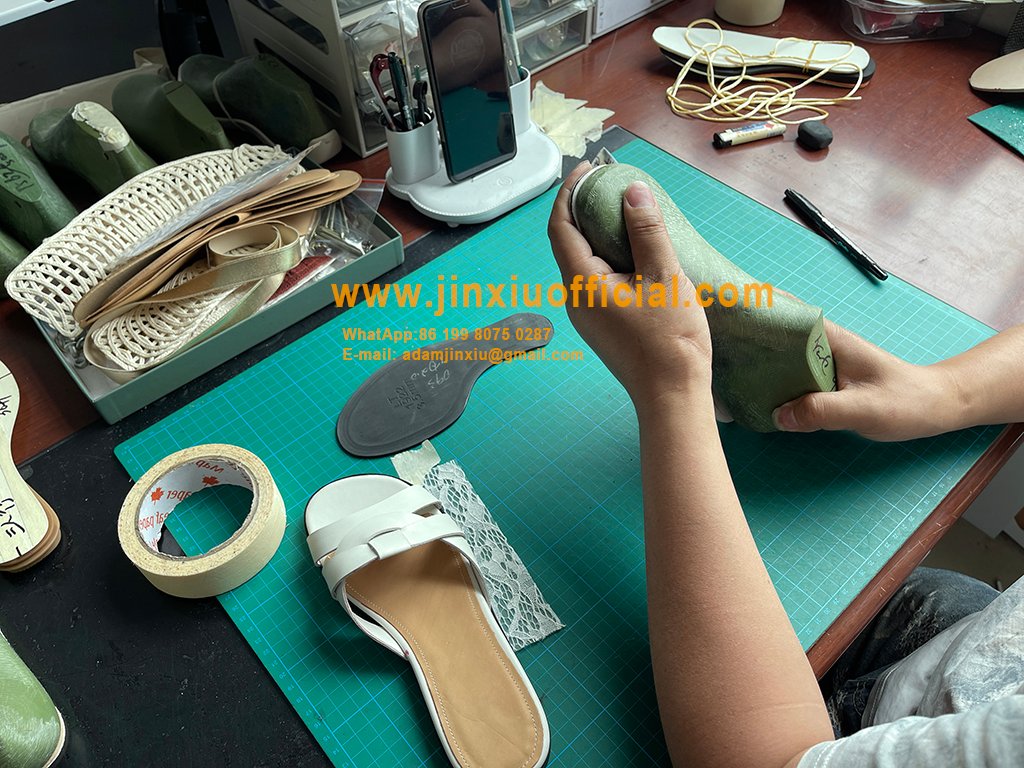
In footwear manufacturing, OEM projects typically require more development work.
This can include:
- Adjusting patterns and proportions
- Refining materials and components
- Testing fit and construction
- Multiple rounds of sampling?JINXIU always does 4-6 rounds, which is 2 times as many as the typical rounds of others.?
As a result, OEM projects usually involve longer lead times and more coordination.
Private label projects, on the other hand, often move faster because the technical base already exists.
MOQ expectations can also differ, but not in a fixed way. They depend on:
- Materials
- Number of variations
- Customization level
- Production setup
Rather than assuming one model is “cheaper” or “easier,” buyers should evaluate which structure fits their actual project.
5. Which Model Should You Choose?
There is no universal answer. The right model depends on your business stage and product goals.
OEM is more suitable if:
- You have a clear product concept
- You need specific construction or materials
- Product differentiation is important
- You are prepared for a longer development process
Private label is more suitable if:
- You want to launch quickly
- You are testing a market
- You prefer a more efficient development path
- You are comfortable starting from existing styles
In many cases, buyers start with private label and transition to OEM as their product direction becomes clearer.
6. Working with a Footwear Manufacturer in China
When working with a footwear manufacturer, the key is not just choosing OEM or private label, but aligning expectations early.
Before starting a project, buyers should clarify:
- Whether they have a defined product direction
- How much customization is actually required
- Expected development timeline
- Target price and market positioning
- Order structure after sampling
Clear alignment at this stage reduces delays and improves production outcomes.
While manufacturing is the core of most projects, some buyers may also require support with materials, components, or coordination across different suppliers. In such cases, working with a manufacturer that understands the local supply chain structure can help simplify the process.
Conclusion
OEM and private label are both practical approaches in footwear manufacturing, but they serve different needs.
OEM offers more control and flexibility for original product development, while private label provides a faster and more efficient path based on existing models.
For international buyers, the goal is not to choose the “better” option, but to choose the one that fits your product, timeline, and business strategy.
Not Sure Which Model Fits Your Project?
If you are planning a footwear project and need a clearer understanding of development approach, customization level, or production structure, our team can support you with practical guidance based on your requirements.